
A coffee bar cabinet is easy to fall for. The mugs match, the machine has its own spot, and suddenly the kitchen counter looks like somewhere you could actually make breakfast. But before you buy one, imagine using it when you're half awake and the water tank is empty.
Can you refill the machine without dragging it forward? Where does the wet spoon go? And will you still love those little door grooves after coffee grounds find their way into them?
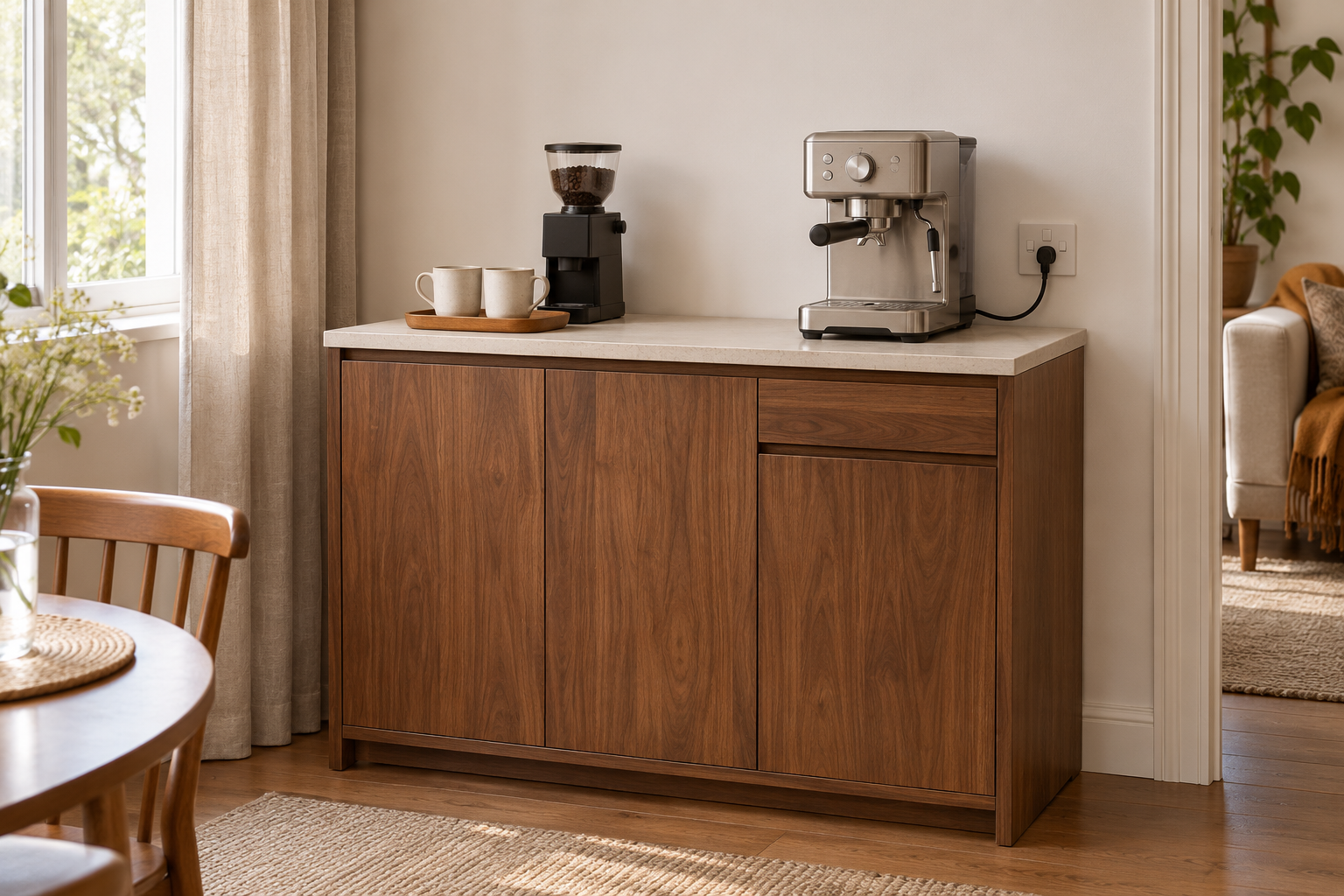
The interest in dedicated coffee spaces is real. In the 2026 UK Houzz Kitchen Trends Report, coffee and tea stations appear in 27% of surveyed homeowners' completed, ongoing or planned kitchen renovations. That figure covers built-in features, rather than sales of freestanding cabinets, but it helps explain the appeal of giving the morning routine its own home.
At Hometios, we make panel furniture, so our eyes tend to go straight to the edges, shelves and fittings. For your home, though, the useful question is simpler: does this cabinet make a cup of coffee easier to make?
Start with your machine, then choose the cabinet
Don't shop by cabinet width alone. A long, shallow sideboard might hold plenty of mugs but leave an espresso machine awkwardly close to the front edge.
Measure the machine's full footprint, including anything that sticks out. Then check how you remove the water tank, open the bean hopper, swing the steam wand and pull out the drip tray. The appliance manual's clearance requirements belong on that same shopping note.
Here's a useful little exercise: lay out your machine, grinder, favourite mug and milk jug on your existing counter. Leave a comfortable patch of space to work. Measure that arrangement. It's a much better starting point than guessing from a beautifully styled product photo.
What about cabinet height? Try the routine at a surface you already own. A low sideboard may look lovely across the dining room, yet feel awkward when you're filling a kettle or preparing an espresso. Choose a working height that suits the people who will actually use it.
Open buffet, tall hutch or hidden coffee cupboard?
These are three quite different ways to bring the coffee-bar look home.
- An open-top buffet keeps the machine accessible and the wall above it clear. We'd start here if everyday convenience matters more than hiding the equipment.
- A cabinet with a hutch adds mug and jar storage above the worktop. Check the usable gap above the machine, including room for refilling and the clearances its maker requires.
- A hidden station with doors gives you a tidy room when everything is put away. The catch is that storage space and safe operating space aren't necessarily the same thing.
That last point matters. For example, Breville's Barista Express Impress instructions say the machine must not operate inside a cupboard or enclosed space. Simply opening the doors doesn't override the appliance instructions. Check your own machine before buying a cabinet built around a hidden setup.
The top has to cope with more than a pretty tray
A coffee corner gets drips, damp cups and the occasional hurried wipe. When we look at a panel cabinet for this sort of use, we pay attention to the top surface and how its edges are finished.
Ask what the top is made from and what the care instructions allow. A wood-grain finish doesn't tell you whether you're looking at veneer, laminate or another surface. Likewise, a stone-look top isn't automatically stone, and a wipe-clean finish isn't a promise that standing water is harmless.
Check that the top's stated load capacity covers the machine, grinder and everything else you plan to leave there. For the appliance itself, follow the required surface conditions: a decorative tray doesn't turn an unsuitable top into a suitable one.
A small tray for spoons and damp cups can make cleanup easier. Lift it regularly, dry underneath, and wipe spills before they sit along an edge or joint.
Give the messy things a home, too
Open shelves look great with four favourite cups. They look rather different with half-used filters, cleaning tablets and three bags of beans.
Our preference for an everyday station is a little open storage and enough closed storage for the less photogenic bits. Check the actual shelf openings against your tallest mug and your usual coffee bag. A drawer is useful only if the accessories fit inside it.
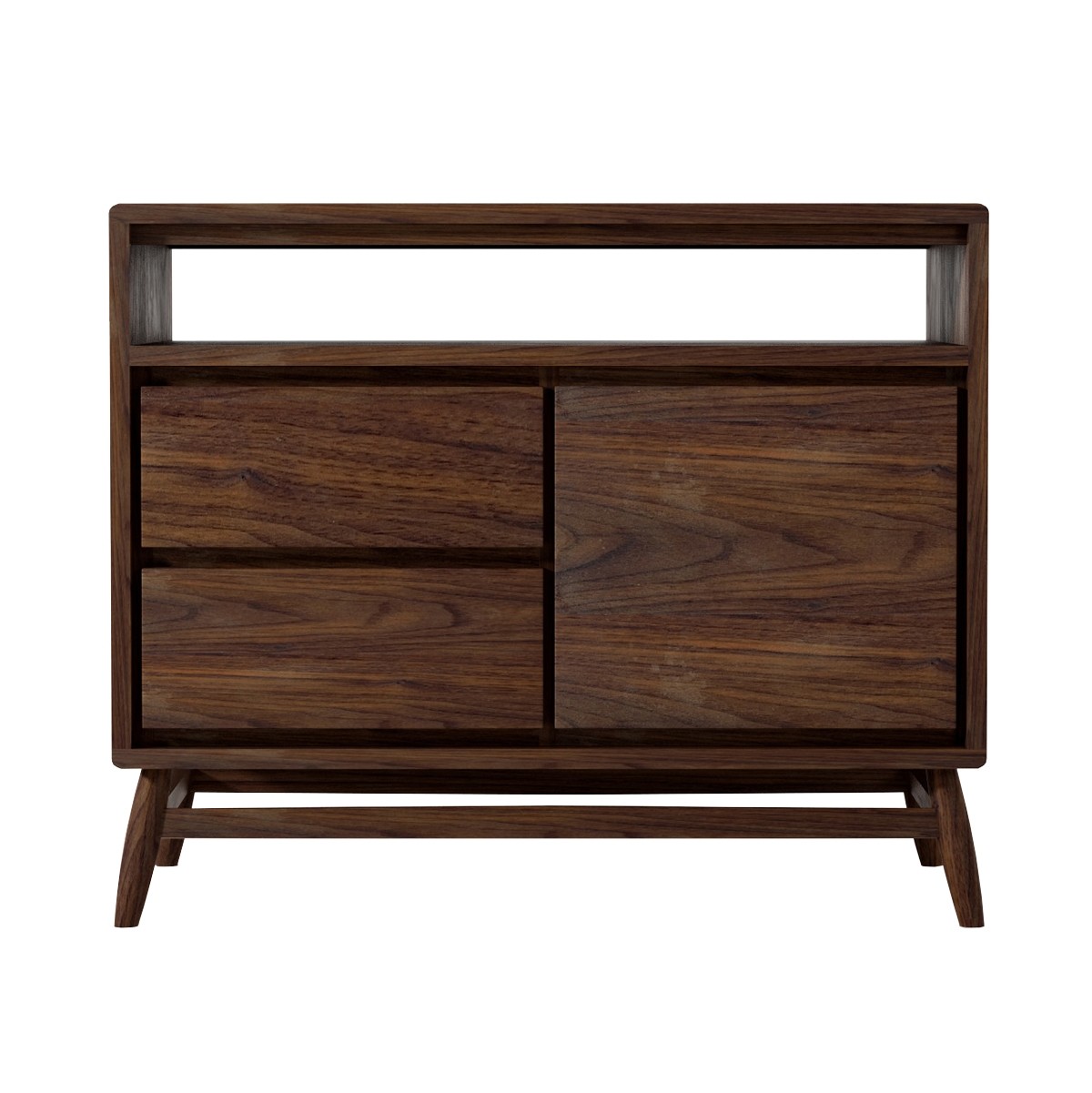
That layout is worth comparing if you want a few favourite pieces on show without displaying everything you own. Before using any buffet as an appliance station, confirm its height, depth, top material and load rating against your equipment.
Fluted doors or plain fronts?
Fluted fronts bring texture to a plain corner; a dark wood tone can make the setup feel more like furniture than an extra kitchen unit. There's no need to match every cabinet in the room.
We'd be more selective about where the detail goes. Smooth surfaces around the preparation area are easier to wipe, while decorative grooves on lower doors stay farther from the action. Look at a close-up of the handles, too. Can you open a drawer comfortably with one hand?
If you're deciding between two finishes, picture them alongside your actual machine. A bright stainless appliance and a black grinder already create plenty of contrast. Sometimes the quieter cabinet is the one you'll enjoy for longer.
Do you really need a cabinet with built-in sockets?
Only if they suit the equipment you plan to connect. A USB charging port tells you nothing about whether a cabinet's power arrangement is suitable for a coffee machine and kettle.
Check the appliance instructions, the electrical ratings and the intended outlet arrangement before buying. Also look at where the wall socket will sit: you don't want a plug preventing the cabinet from sitting properly, or a cable stretched across the place where you prepare drinks.
For many homes, a cabinet positioned sensibly beside a suitable wall outlet is the less complicated choice.
Is a coffee bar cabinet worth the space?
We think it earns its place when it clears a busy kitchen counter and keeps the everyday kit together. If you only make an occasional pour-over, a small tray and a cupboard shelf may already do the job.
Before ordering, rehearse one whole morning: take out a cup, refill the machine, make the drink, empty the tray and put everything away. If the layout works through all five steps, you've found something more useful than a nice photo.