
A bookcase is easy to shop for when it's holding five beautiful books and a vase. It's a little trickier when you own paperbacks, oversized cookbooks, a half-finished scrapbook and a basket of things nobody knows where to put.
That's the version of the room we'd plan for. We make panel furniture at Hometios, and we enjoy a good-looking shelf as much as anyone. But a bookcase earns its place when you can find a book, put it back and keep the room feeling comfortable. Here's how we'd choose one for everyday use.
Put your books in a pile before you start browsing
Not every book needs the same space. Gather a few of your tallest and deepest books, plus the ones you reach for most. Measure those rather than guessing from a row of novels.
“Should I buy deeper shelves, just in case?” Only if you need them. Extra depth can help with larger books, but it also takes up floor space and can leave smaller books disappearing towards the back. Compare the usable shelf depth and clear opening height with your own collection.
Make a second pile for everything that isn't a book. If the shelf will also hold baskets, folders or a speaker, those objects should help decide the layout from the beginning.
Cube storage: useful when everything needs its own place
The 9 Cube Storage Bookcase has a white three-by-three grid of open compartments. We'd consider this layout for a living room where books share space with everyday odds and ends. The divisions give you an obvious place to group things: novels together, paperwork together, a basket for the loose bits.
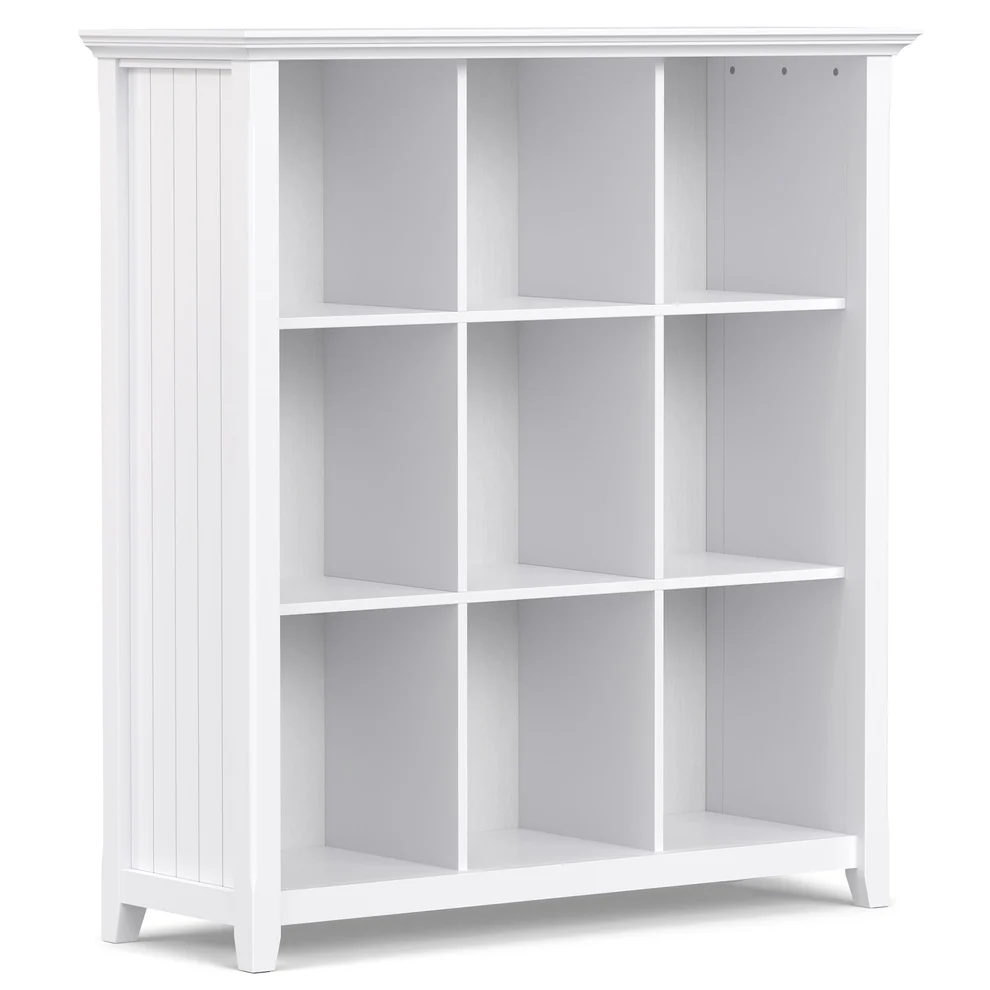
There is a trade-off. A fixed-looking grid can be less forgiving when you own tall art books or wide albums. Confirm whether the shelves are fixed or adjustable and ask for the internal dimensions of each opening. The outside measurements won't tell you what fits inside.
For baskets, check the widest part, including handles and any flared rim. Leave enough room to get your fingers in and pull the basket out. A box that squeezes into a cube isn't necessarily pleasant to use every day.
Longer shelves: a little more freedom for mixed sizes
The Geometric 3 Tier Bookcase takes a different approach, with warm wood-tone surfaces, broad rounded side panels and open horizontal levels interrupted by dividers. We'd shortlist it when the shape of the bookcase should be part of the room, rather than just a background grid.
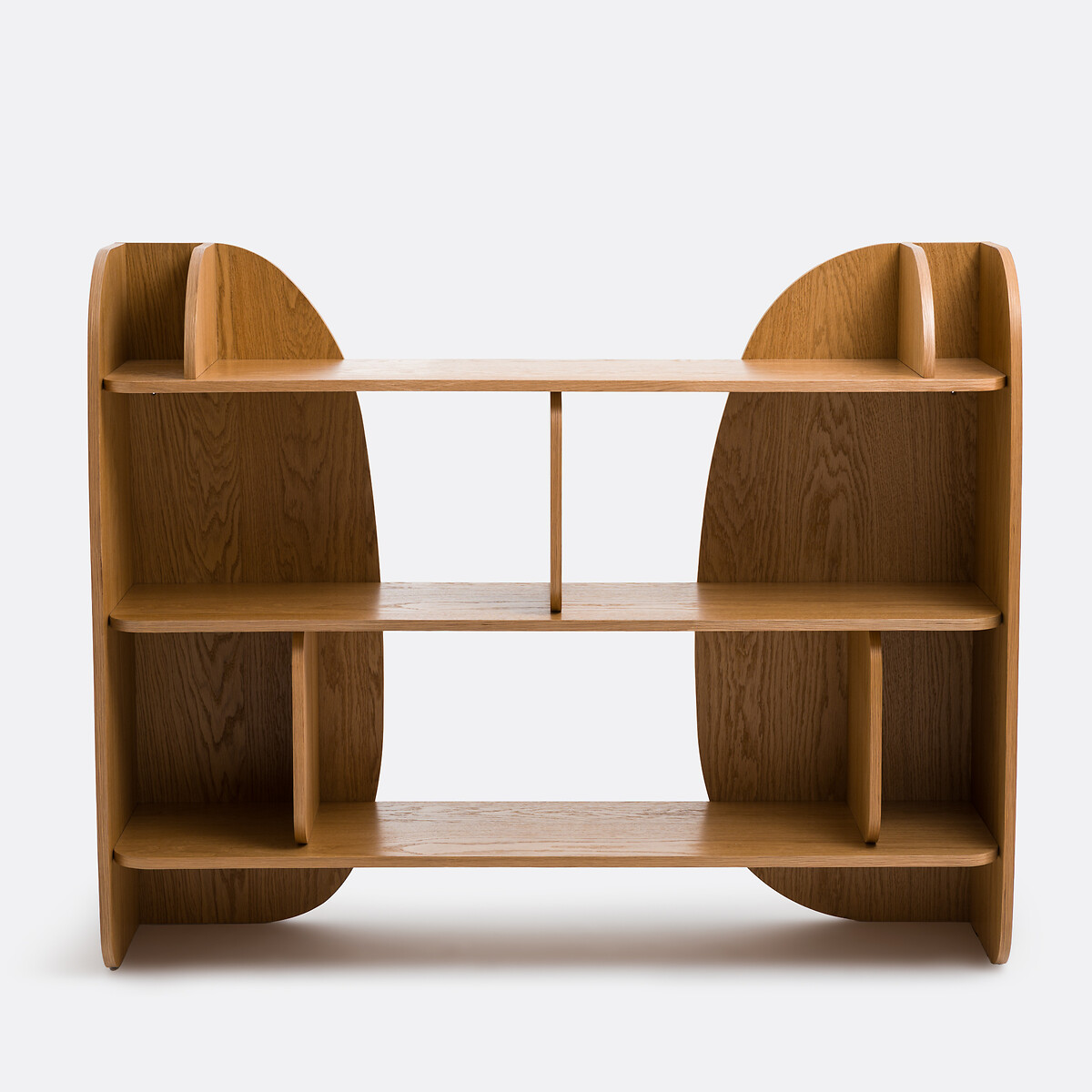
We like the idea of keeping a run of paperbacks together and using a separate section for an object you enjoy looking at. But check each opening individually: dividers mean the full outside width isn't one uninterrupted shelf.
If the shelf will hold heavy books, ask for the load guidance for each level and how the weight should be distributed. As a factory, we'd rather answer that practical question than have you guess from the thickness of a panel in a photograph.
A round bookcase: plan the space around it, too
The Hometios Rotating Bookcase has a cylindrical outline with circular shelves and vertical dividers. It offers a very different look from a rectangular unit against a wall.
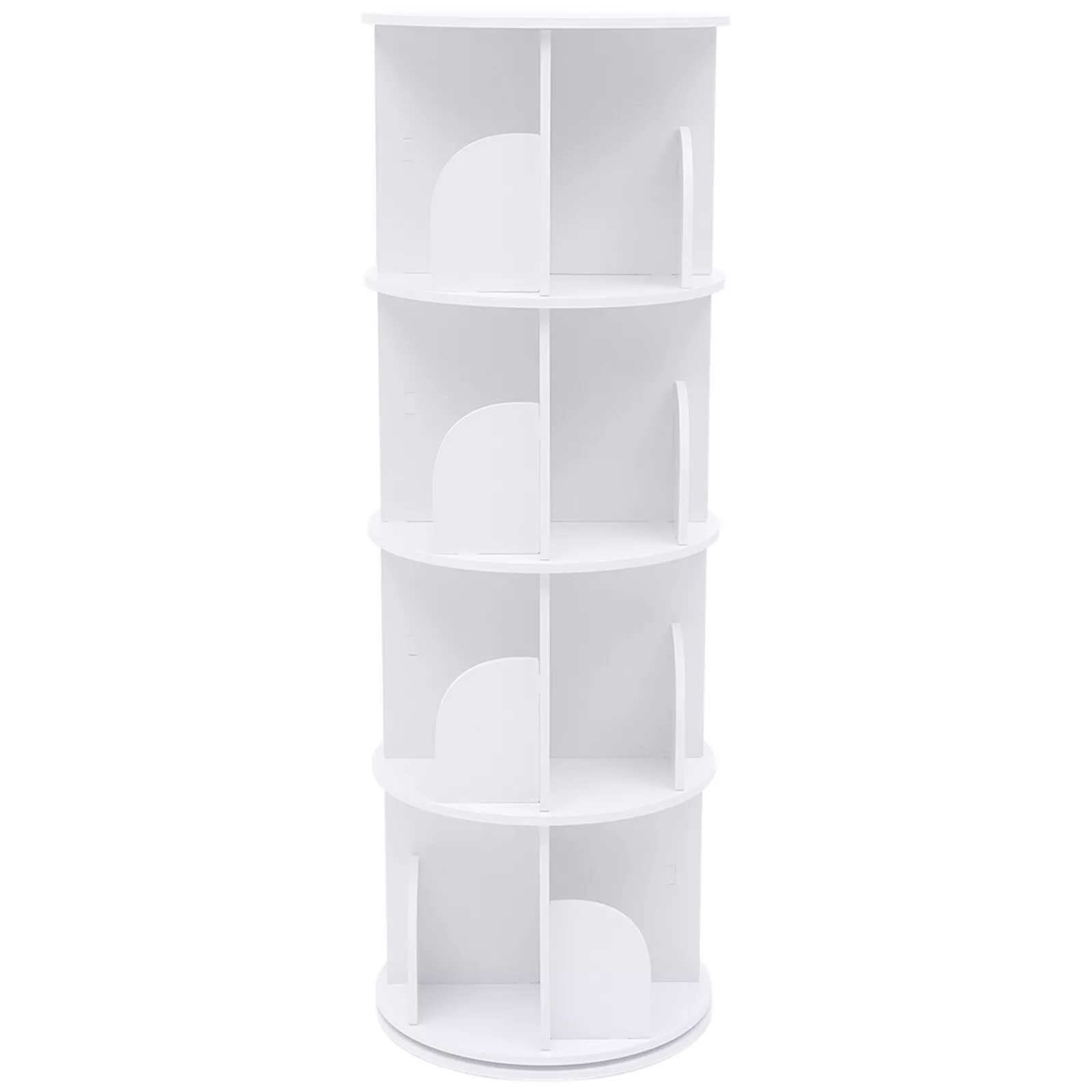
“Would this work in my reading corner?” Possibly, but measure the whole corner. Ask how the rotation works, what clearance is needed and how much usable space each compartment provides. Allow room for books or objects that project beyond the shelves, too.
We'd think about where you'll stand or sit to browse it. A round footprint may suit your layout, but the space needed to use the bookcase matters as much as the base itself.
Check the details you'll touch every day
When you're comparing panel furniture, look closely at the shelf edges, visible joints and how the back is finished. A smooth edge is something you'll appreciate every time you slide a book in. If the unit will be visible from the side or back, ask for photographs from those angles.
A wood-tone image doesn't identify the core material. Ask what the panels and surfaces are made from, and how to care for them. For colour, compare a finish sample with your floor or nearby furniture if you can. Two finishes called “oak” can look quite different together.
Also read the assembly and fixing instructions before ordering. Check what wall attachment the exact model requires, and plan the position around a suitable fixing point. Follow the supplied instructions when assembling, securing and loading it.
How much styling do you really want to do?
You don't need to turn every shelf into a display project. Start with the books you use. Keep the regular favourites easy to reach, give the awkward-sized items a place, and add a few personal things if there's room.
If you dislike visual clutter, a couple of suitable baskets can help with small loose items. If you love seeing book spines, let them be the decoration. We'd leave a little space for the next book you bring home, too.
Three quick questions we would ask
Can I put storage baskets in any cube bookcase?
Only after comparing the basket's outside dimensions with the compartment's usable opening. Handles, shelf lips and the space needed to lift it out all count.
How many books will it hold?
That depends on book sizes, the internal layout and the confirmed shelf loads. A photo or compartment count won't give you a reliable answer. Start with your collection and the product's measurements.
Which layout would we choose?
We'd start with the nine-cube design for clearly separated storage, the Geometric 3 Tier Bookcase for a mix of books and display, or the round bookcase when its access and clearance suit the room.
Explore the Hometios shelving and bookcase collection, then ask us about the measurements that matter to your setup. Bring the book pile and basket dimensions. They're a better starting point than a perfectly styled photograph.
Ordering from Hometios
The minimum order quantity is 100 pieces per model per colour. Different models can be shipped together, with the minimum met for each model and colour. See quantity examples and prepare your sourcing brief.