
A sideboard assortment becomes easier to explain when each model has a distinct storage purpose. One design may keep the front visually consistent with doors; another may combine drawers with open shelves; a taller cabinet may provide an alternative for customers considering a different room layout.
For Australian and European furniture buyers, this is a practical starting point for range planning. Compare how the storage is divided and accessed before choosing finishes and planning the product presentation. The following examples are real products from the Hometios Sideboard & Buffet collection.
Map the assortment by storage job
Begin with the items customers might want to put away or display. Table linen, smaller accessories and serving pieces create different storage questions. Use those examples to brief the sample review, then confirm actual capacity from internal measurements.
| Storage role to evaluate | Hometios reference | Detail to confirm |
|---|---|---|
| A consistent closed front | Modern Sideboard with 3 Doors, #32 | The shelf plan behind the three doors |
| Separate drawers, a cupboard and visible storage | Industrial Sideboard with 1 Door, 3 Drawers, #31 | Drawer interiors, door opening and open-shelf clearances |
| A taller cabinet alternative | Farmhouse 2 Door Storage Cabinet, #30 | Overall proportions, internal layout and installation instructions |
This gives the buying team three different layouts to assess. It does not require every model to share the same materials, dimensions or commercial terms.
A closed-front anchor: the three-door sideboard
The Modern Sideboard with 3 Doors has a wood-tone outer case, three door fronts with arched woven-look panels and short supporting legs. The repeating arches make the front pattern a clear part of its visual identity.
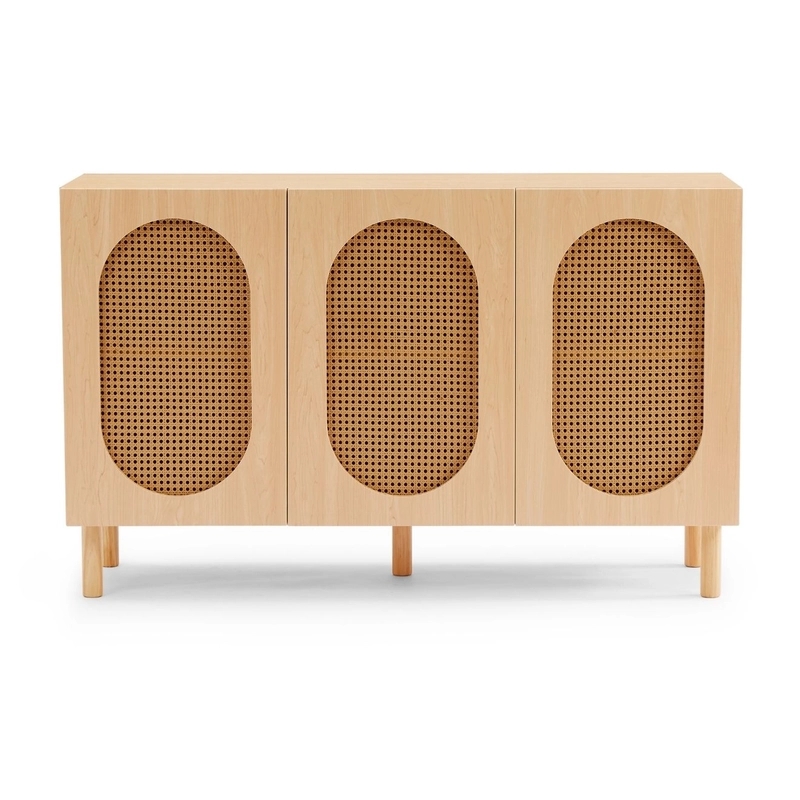
For range planning, use this model to explore a consistent closed-front option. Ask for photographs with the doors open and a drawing showing the internal divisions. Three doors do not, by themselves, tell the buyer how many shelves are supplied or whether the shelves adjust.
Coordinate the woven-look fronts with the case finish, and request insert and finish samples to compare the colour and texture.
A mixed-storage option: doors, drawers and open shelves
The Industrial Sideboard with 1 Door, 3 Drawers combines a left-hand cupboard door, central open shelving and a stack of three drawers. A warm wood-tone case contrasts with its dark raised base and dark detailing.
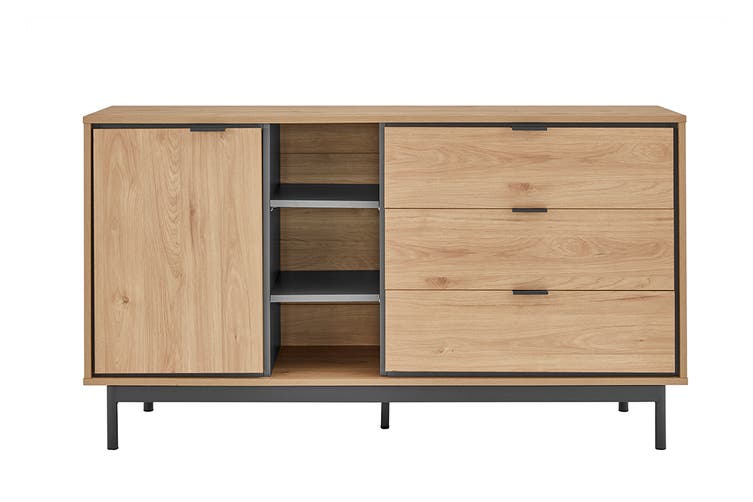
This is a useful reference when the assortment needs a visibly different storage mix. Small accessories could be part of a drawer-use demonstration, while the open section can illustrate accessible display storage. Check the proposed objects against the actual openings before photographing them.
Measure the drawers internally, including their usable height and opening travel. Review the space behind the door separately from the centre shelves. A list of compartments becomes much more useful when the listing explains what can fit and how the customer reaches it.
A vertical alternative: the farmhouse storage cabinet
The Farmhouse 2 Door Storage Cabinet has a taller cabinet format, two doors with diagonal-brace detailing and open cubbies across the upper section. Circular openings are visible behind that upper storage.
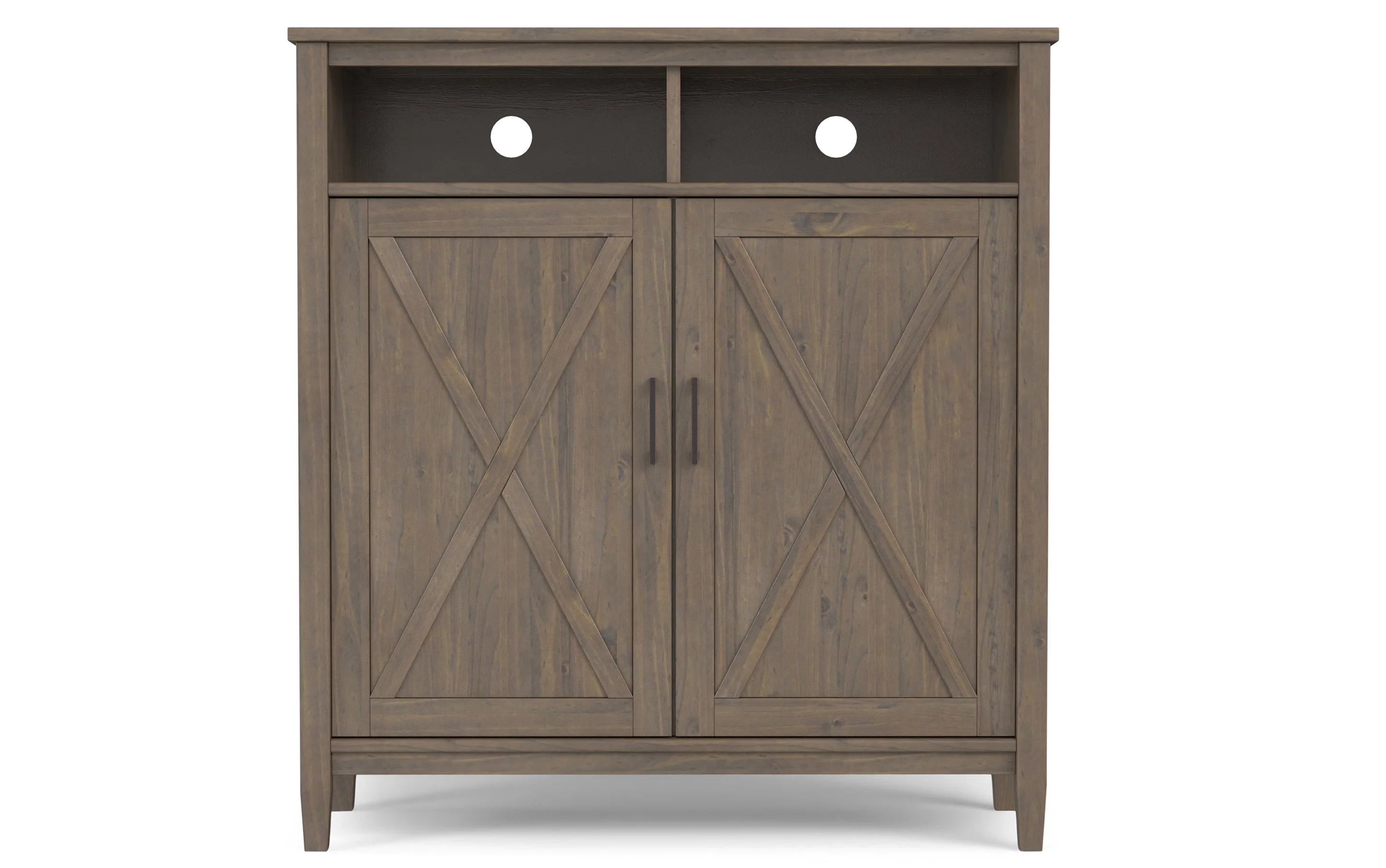
Present this as a separate cabinet format in the buying discussion. Compare the overall height, width and depth with the room layouts in your range plan.
Review the internal shelf plan and the upper storage openings with Hometios to discuss how the cabinet will be used in your collection.
Compare access as well as the number of compartments
Door counts and drawer counts describe the front, but they do not explain the full storage experience. Review each sample with the doors and drawers open. Check access around hinges, the clear opening of each compartment and the space needed in front of the furniture.
For open shelves, record clear height and depth rather than shelf spacing alone. For the top surface, request the applicable load guidance before showing heavy objects in a room setting. If a model requires wall attachment, keep that information consistent across the approved instructions and the listing.
Document these findings with open-front photographs. They help a retailer show the difference between a decorative closed front, divided drawer storage and an open display section without relying on vague capacity claims.
Keep the collection coherent without making every piece identical
A coordinated assortment can share a colour direction or contrasting base detail while offering different storage layouts. Compare physical finish samples together under consistent lighting, especially when products will appear beside one another in a showroom or category page. Review finish samples together to choose the best colour match.
For Australia and individual European markets, use your own category structure and search data to decide how to present sideboards, buffets and storage cabinets. Keep the functional difference clear in translated copy. A taller cabinet and a lower sideboard should remain easy to distinguish when shoppers compare dimensions and room photographs.
Give each variant a stable product reference. The same reference should appear in the quotation, approved sample record, product listing and after-sales information, even when retail names differ by country.
Create an approval pack the buying and content teams can share
Build the approval record around information that explains the storage:
- A dimensioned drawing showing the overall footprint, internal divisions and opening clearances.
- Front and open-storage photographs of the approved sample.
- Confirmed drawer, door and shelf specifications, including any adjustable parts.
- Material and finish references for the case, fronts, inserts and base.
- The relevant assembly or installation instructions and verified load guidance.
- Model-specific carton details and the quotation scope for the destination and delivery channel.
These records also give the retail content team a sound basis for product descriptions. Avoid promising a particular number of plates, bottles or storage boxes unless that arrangement has been measured and checked.
Discuss your storage range with Hometios
Compare the Modern Sideboard with 3 Doors, the Industrial Sideboard with 1 Door, 3 Drawers and the Farmhouse 2 Door Storage Cabinet, or explore the full Sideboard & Buffet collection.
Send Hometios your sideboard and cabinet sourcing brief with the selected references, required quantities, destination country and preferred finish. Request confirmed specifications, packing, MOQ and production timing for each model on your shortlist.