
A shoe cabinet and a shoe bench can sit in the same entryway furniture collection while answering different customer needs. A cabinet offers a closed front; an open-storage bench gives customers a place to sit and reach their footwear. Choosing which designs to stock starts with how the entryway will be used.
For furniture retailers, importers and brands supplying Australia or Europe, a useful range comparison looks at storage access, seating, proportions and presentation. The examples below come from the current Hometios shoe cabinet and bench collection.
Start with the role of each piece
Write a short purpose for each model before discussing colours or pricing. A closed cabinet may be selected for customers who want footwear concealed behind a furniture front. A bench may be selected where sitting down to change shoes and keeping everyday pairs within reach are priorities.
A combined design is another option. Hometios lists a two-door shoe cabinet with a bench. Treat its seating area, closed storage and overall footprint as separate parts of the specification when requesting details.
Compare cabinet and bench layouts
| Format | Range-planning role | Details to request |
|---|---|---|
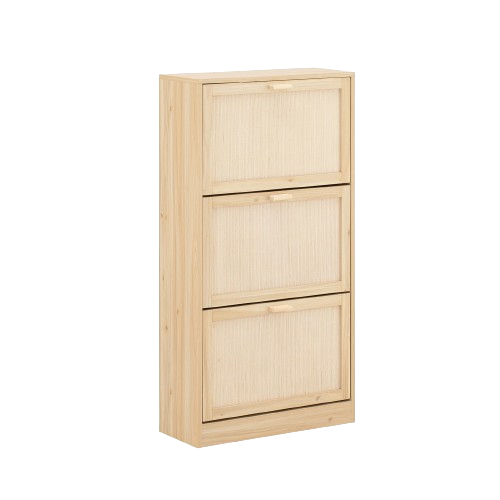
| Three-door shoe cabinet | A closed-front storage option for the collection. | Internal compartment sizes, opening method, fittings and space needed for access. |
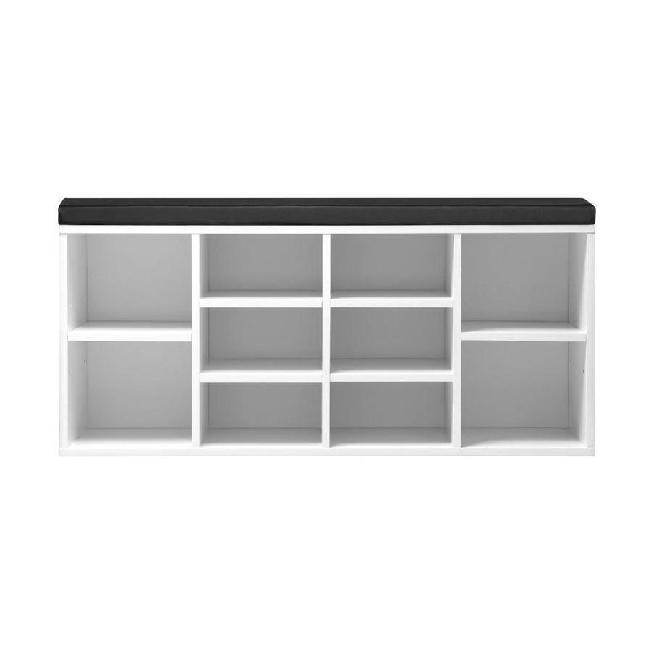
| Shoe storage bench | A seating-and-storage option with open compartments in the catalogue image. | Seat dimensions, compartment sizes, seating specification and care information. |
| Cabinet with a bench | A combined option where the proposed layout calls for both functions. | The dimensions and access requirements of each section, plus the complete assembled footprint. |
Compare the dimensions and construction details of the selected models when preparing your quotation request.
Check usable space rather than counting compartments
A compartment count alone does not tell a buyer how footwear will fit. Request internal dimensions and identify the shoe types used for any capacity illustration. Everyday shoes, boots and children's footwear can require different arrangements.
For a cabinet, confirm how the fronts open and whether fittings reduce usable internal space. For a bench, check how shelves divide the storage area and whether the proposed layout accommodates the intended footwear. Ask for an internal drawing or sample photographs when the catalogue image does not show those details.
If you plan to advertise a capacity, agree on the basis for that statement before preparing product copy.
Review the footprint with the furniture in use
Record the assembled width, depth and height, then review the space needed for opening the storage and using the seating. A floor-plan sketch can show whether an open front, a person seated on the bench or a nearby room door affects access.
For a combined cabinet and bench, confirm the arrangement shown in the drawing, including whether the seating position and cabinet position are fixed. When comparing models for different stores or channels, keep those layout requirements in the range brief.
Build a coordinated assortment without assuming identical specifications
If the collection will include both cabinets and benches, select the visual details that should connect them. These might be a finish reference, a handle style, an edge detail or a repeated frame shape. Ask the supplier to identify which details can be coordinated across the selected models.
Coordinate the selected models through their materials, coatings and construction details. Where the bench includes a seat pad, confirm its material, attachment and care information for the version under discussion.
For seating, stability or wall-fixing questions, ask which instructions, checks and supporting information apply to the exact design and destination market.
Prepare the listing information alongside the order
Use the sample review to collect information your sales team and customers will need. Photograph the storage open, show important dimensions and record the assembly steps. Confirm the proposed carton contents, component labels and replacement-fitting references with the supplier.
Include the destination country and sales channel in the brief. An Australian or European buyer can then confirm product information and documentation needs with the relevant importer or adviser before approving the order.
Send an entryway furniture enquiry
Choose your reference models from the shoe cabinet and bench collection and send Hometios an enquiry. State the role of each piece, quantities, destination and details still to be agreed. For the wider order process, use the flat-pack furniture sourcing checklist to organise the remaining questions.