
A home office desk can look convincing in a product photograph and still leave important questions unanswered. Where will the chair sit? How much desktop remains once a screen is in place? Can the customer reach the storage without moving their equipment?
For furniture importers, retailers and brands buying for Australia and Europe, these questions provide a useful way to build a desk range. Start with the working setup each model will serve, then compare its footprint, storage and equipment clearances. The three real products below come from the Hometios desk collection.
Give each desk a clear role in the range
Three desks in different finishes do not necessarily give customers three useful choices. A more distinct assortment can pair a drawer-led design with a desk-and-shelving layout and a raised-shelf option. Compare these layouts against your target dimensions and the way customers will use the desk.
| Potential range role | Hometios reference | Key question for the sample |
|---|---|---|
| A work surface with enclosed everyday storage | Home Office Computer Table Desk with Drawer, #84 | How do the drawer and rear detail affect the usable work area? |
| A work surface combined with accessible shelving | Corner Writing Desk, #83 | Does the shelving arrangement suit the intended room plan? |
| A desk with a raised shelf and divided storage | Writing Desk with Monitor Shelf, #85 | Will the proposed equipment fit the shelf and working surface? |
A drawer-led desk: make the working area easy to understand
The Home Office Computer Table Desk with Drawer has a pale body, contrasting wood-tone details, a broad drawer front and open side shelving. Its raised rear detail creates a different outline from a plain rectangular writing table.
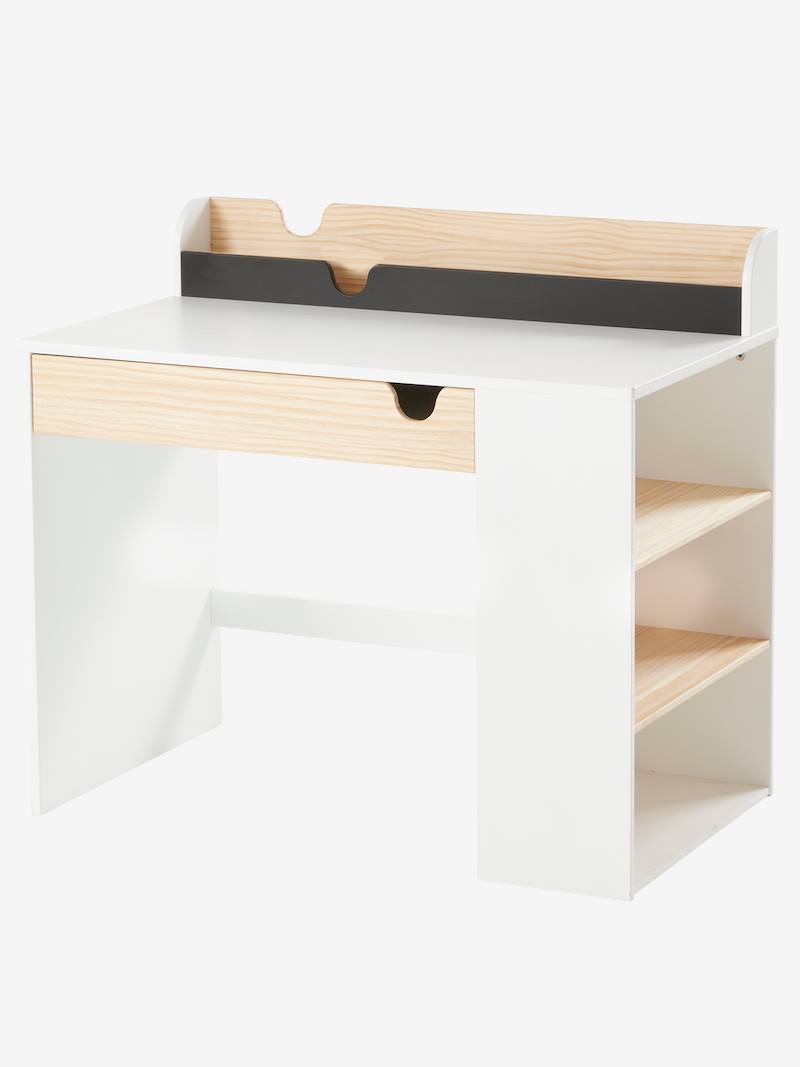
For the buying brief, record the clear desktop depth in front of the rear section and the space available beneath the drawer. During sample review, place a laptop, notebook and mouse on the desk, then open the drawer with a chair in position. This simple exercise gives the merchandising team more useful information than the overall width alone.
Photograph the side shelves from the access side as well as the front. Customers should be able to see how that storage works when the desk is placed beside a wall.
A desk-and-shelving layout: confirm the room arrangement
The Corner Writing Desk combines a wood-tone work surface, a dark open frame and a shelving end with open cubbies. It offers a different visual and storage arrangement from the drawer-led model.
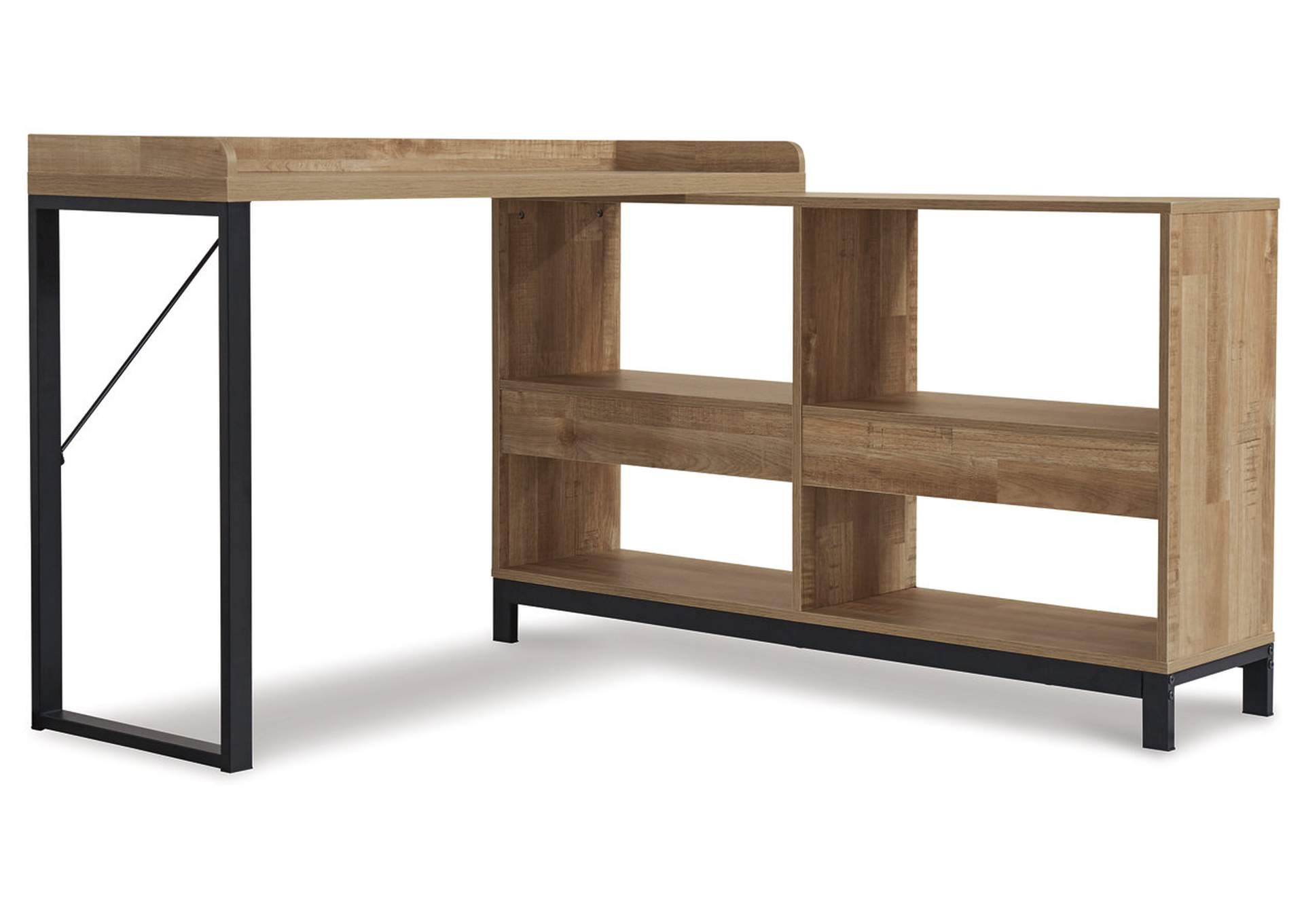
Request a dimensioned plan showing the desk and shelving together. Confirm the supplied orientation and discuss alternative arrangements for your room layout.
For an Australian or European retail listing, a simple overhead diagram can explain the layout more clearly than several similar front views. Include the space needed to pull out a chair and reach the cubbies. If the room image includes folders or storage boxes, check their sizes against the actual internal openings before using that image to illustrate capacity.
A monitor-shelf desk: test the equipment setup
The Writing Desk with Monitor Shelf uses white and wood-tone sections, a raised shelf, a drawer pedestal and open shelving at the opposite end. It can be assessed as a more storage-focused option within the assortment.
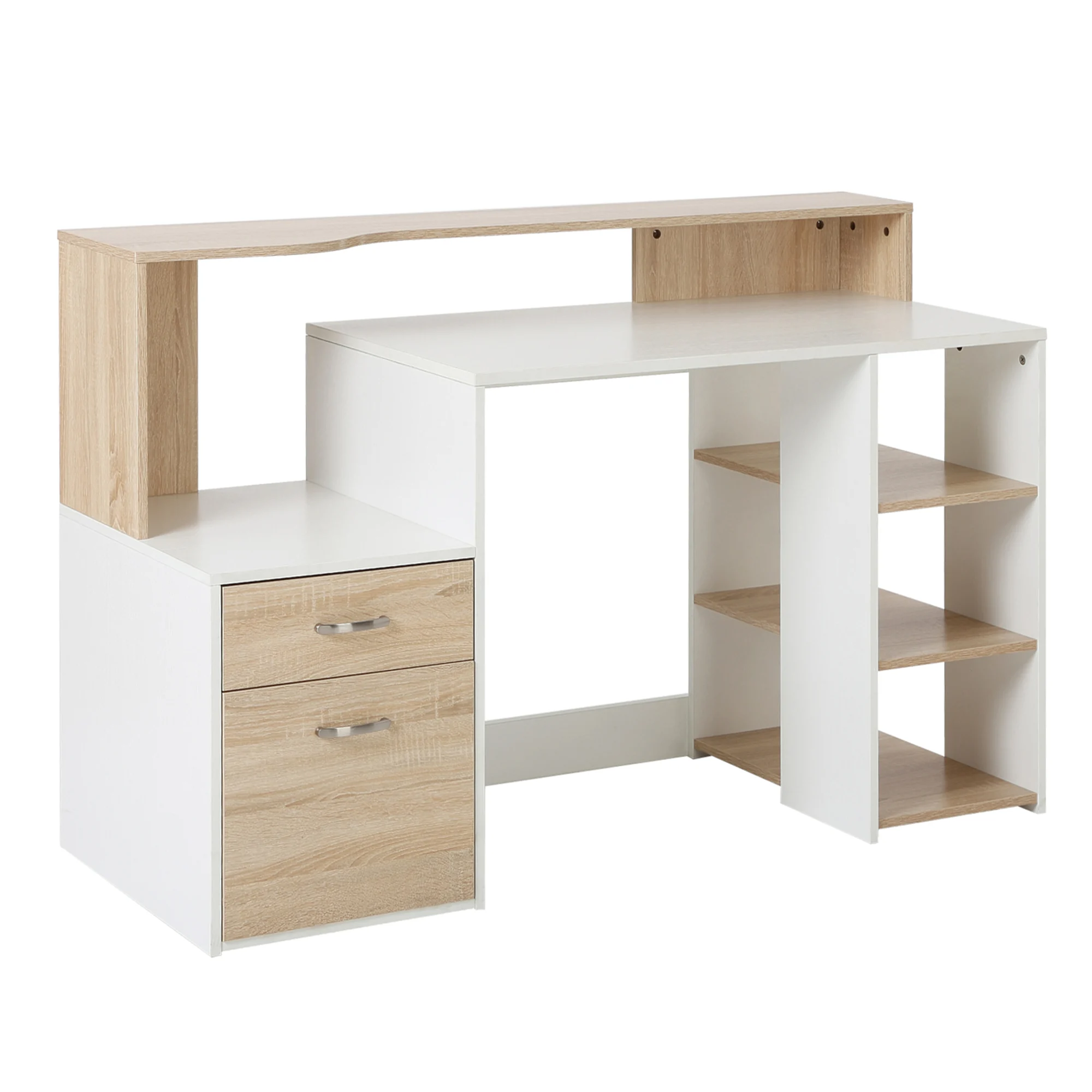
Ask for the shelf depth, height above the main desktop and verified load guidance. Compare those details with the proposed monitor base, then check the remaining keyboard and mouse area. Review the screen position with the intended chair and equipment in place.
Also inspect cable routes with the desk in its intended position. Confirm whether any cable openings or other accessories are part of the supplied specification before including them in product copy. List equipment compatibility only when it has been checked.
Approve the space customers will actually use
Use one review sheet across the shortlist so the buying team can compare like with like:
- Working surface: overall dimensions and the clear area after shelves, rear details and equipment are taken into account.
- Chair clearance: the width, height and depth of the open space beneath the desktop.
- Storage access: internal shelf openings, usable drawer dimensions and space needed to operate the drawer.
- Room footprint: the assembled outline, storage orientation and access space.
- Equipment placement: the proposed screen base, cable route and any verified shelf load limits.
Take sample photographs with the same equipment on each desk. This helps buyers distinguish a meaningful functional difference from a change in styling.
Prepare listings for Australia and individual European markets
Keep a master drawing with dimensions in millimetres, then adapt the presentation to each sales channel. Show overall size and usable clearances separately. Translate storage descriptions and assembly instructions for the intended market, and keep the product reference consistent across the listing, carton information and after-sales records.
For mixed-market programmes, identify the destination country and language version on the purchase brief. Review your own customer questions and search data when choosing retail terms such as writing desk, computer desk or home office desk. The wording should reflect the confirmed product and the way your customers shop.
Build your home office desk shortlist with Hometios
Start with desk #84, desk #83 and desk #85, or browse the full desk collection. Request the confirmed specification sheets and use the same working-space review for each sample.
Send Hometios your desk sourcing enquiry with the selected references, target quantity, destination country, preferred finish and delivery channel. Ask for model-specific materials, packing details, MOQ and production timing as part of the quotation.